Click on photos to enlarge, please do not copy photos without permission

Wednesday, 18 April 2012

Walthamstow Reservoirs


April 17th
I have not been to the Reservoirs for a while now, the last time was probably Lol’s Dusky Warbler, I had a good day then with some good species seen. I knew today was going to be rough, especially the morning, with perfect timing I copped the lot as I walked up on to the 1st Reservoir, it came down with a vengeance.

The City - the Shard now dominates the skyline

Out came the poncho, way to big but ideal as it covers camera, bag and scope, the downside with the strong wind is that it sometimes reverses itself like a brolly and tries to blood strangle you. A couple of times it had me impersonating a windsurfer down the side of the Reservoir.
Rather surprisingly given the weather I picked up migrants straight away, I suspect they had been pushed down by the rain and like me were seeking a sheltered spot. First one up was a Little Ringed Plover, feeding amongst a horde of Pied Wagtails; I did search for Whites but none that I could see.
I decided to walk the length of Lockwood Reservoir and then back again, mid-way down I came across more migrants roughly bunched up in a 100 metre stretch, this included the following

Swallow 14 – initially feeding on Lockwood
Sand Martin 3 – in with the Swallows
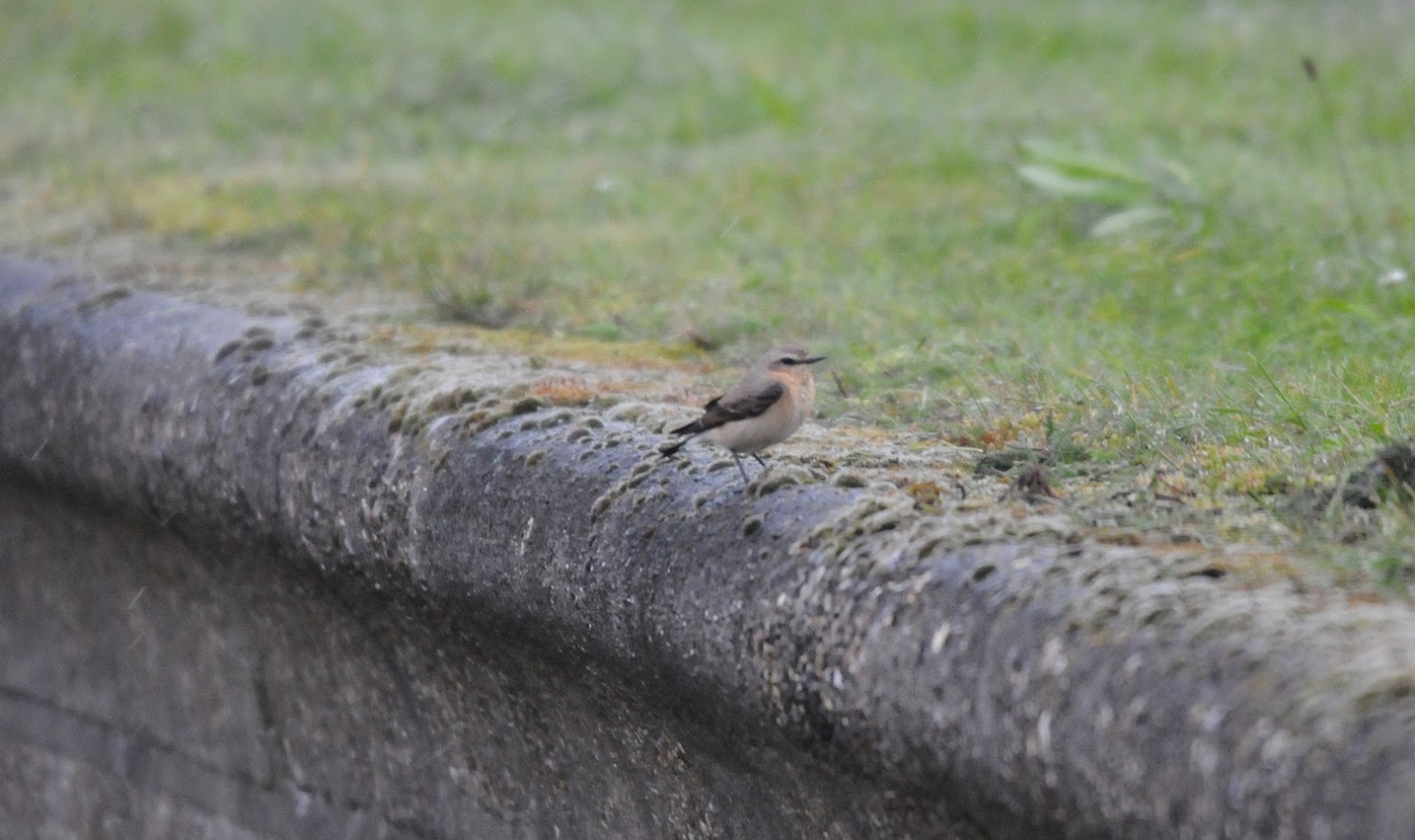
Wheatear 2– on the side loosely associating with Wagtails
Yellow Wagtail - 9 mixed in with the Pied
Grey Wagtail – 1, at one point I had Grey, Pied and Yellow in the same view
Little Ringed Plover – 4 including the one mentioned above, 3 flew out from the side, scoping showed the single still in position further back
Shelduck - a pair
Green Sandpiper – a single in the river


Grey and Yellow Wagtails with a Little Ringed Plover

Little Ringed Plovers

Wheatear


No Common Terns, can’t say I blame them given the weather, a very good variety of migrants and well worth getting soaked for.


Tuesday, 17 April 2012

Barking Bonanza


April 15th

Outfall
A bright but cold morning, only 4 degrees showing in the car, I had my hands in my pockets for the first hour, blimey it was cold, now I am retired I am getting soft.
I checked the Gull colony on arrival, now getting going with many pairs gathering moss and grass from the nearby tanks, also good to see a pair of Great Black Backed Gulls were present in the colony. As yet showing no sign of nest building but I will keep an eye on these, especially as there were a pair present in 2011.
I started to watch the river as the tide was coming in and got onto an Arctic Tern going up river at 7.45am, after this I had Common Terns going up in one’s and two’s, a final count later showed 12 Common Terns feeding as a group on the far side of the river.

Getting into swing - the Gull colony

Common Tern

Grey Wagtail

Shelduck

Another migrant joined the list after; a single Common Whitethroat was heard in the scrub along with 2 singing Blackcaps and also 2 Cetti’s Warblers. I suspect there were probably other migrants present but the cold was probably keeping everything quiet. From here I headed to the Bay, Paul had just found 2 Ring Ouzel’s.

Bay
Thanks to Paul, we quite quickly located the 2 Ring Ouzels, usual brief views before they went to ground; it looked like a male and female. After last year’s female seeing a male was very welcome, although views were not great. Skylark and Meadow Pipits seemed to be everywhere, the grass very much to there liking.
5 Wheatears were also present on the short grass area, 2 cracking males, Paul had earlier had 3 males so very likely there were 6 Wheatears.

Common Tern

Appear to be feedinmg on sme sort of worm


After this we moved down to the receding tide, a minimum of 12 Common Terns were present feeding on what appeared to be very small worms, left in the shallows, no idea what they were but obviously to their liking. It is also possible that these were the same 12 Terns seen earlier ½ mile up river at the Outfall.
To complete a good haul of migrants, 2 Swallows went through going north.


Displaying


Saturday, 14 April 2012

The Valley


April 14th

I walked down at dawn just before 6.00am feeling none too clever after the excursions of the night before up the Railway, needless to say it was the monthly Birders drink, as usual I was suffering.
With my wife’s sentiments still ringing in my ears, “your nut’s” I have to say I agreed with her, I should have layed in, too late to turn back so I ventured forth into the wilderness.
Virtually the first bird heard as I walked in by St. Georges was a Common Whitethroat, a year tick no less and a very good start, good to see them in, like everywhere else migrants have been thin on the ground and most are late. I am yet to record a Little Ringed Plover over the Valley, I always get one at the end of March, not this year though.

Dawn - makes you feel better just looking at it

Walking on and more summer migrants gave themselves up, Yellow Wagtail over the Reservoir, a Cuckoo at Berwick Ponds, Sedge Warbler by the Black Bridge and a single House Martin over the viewing area, presumably the same bird again seen later over St. Georges.
Lots of habitat enhancement has taken place, not only along the river and adjoining fields but also St.Albyns Lake, the lake especially looks quite good, next year it will look a lot more natural when the plant growth has become established.
The viewing area as expected has raised its water levels with the recent rainfall, hopefully this will dry out just right for waders, with all the river work it should now not flood and spill over, with this it may again attract Redshank to breed.

Bullfinch - you never seem to get a clear shot of one of these

Chiffchaff

Willow Warbler

Other highlights included Common Buzzard, Peregrine, both were dots high up, 23 Golden Plover way up also and no less than 14 calling Cetti’s Warblers.

The best of the rest was –

Willow Warbler – now 5 singers
Chiffchaff – 9
Common Whitethroat – 5 birds in total
Red Legged Partridge – a pair in the middle paddock
Teal – still 3 pair hanging on
Blackcap – 12 singing
Bullfinch – 2 pair
Swallow – 1


Early next week should see the arrival of many more migrants; I was hoping for Ring Ouzel today and checked just about everywhere, especially both paddocks, again no luck, it has always been a hard bird to get in the Valley.


Peregrine - way up

Wednesday, 11 April 2012

Heybridge Basin

April 10th

First visit since the winter of 2010, I watched the Estuary for a couple of hours with an interlude in between for some lunch for me and the wife in The Old Ship on the front. I can recommend the pub, good food and very conveniently placed.
Birds were only recorded in the front of the Pits in the estuary facing the island, numbers of summer plumed Black Tailed Godwits were very high with a count of 650 all frantically feeding on a rising tide. This was obviously only the tip of the iceberg as I could see many, many more dropping into the channel looking towards Maldon.
Also good to hear my first Sedge Warbler of the year and also a couple of Swallows were seen over the pits, Cetti’s Warblers were also heard with at least 3 singing birds.

Golden Plover overhead

Black Tailed Godwit

Dark Bellied Brents


Birds seen on the Estuary included:

Avocet – 7 feeding on the mud
Mediterranean Gull – a flyby adult
Dark Bellied Brent Goose – 89 directly in front and then a flock of 300 dropped into the island
Redshank – 170
Golden Plover – 86 initially aloft but then landed on the mud
Dunlin – 68
Bar Tailed Godwit – 15 amongst the Black Tailed hordes
Little Egret – 3
Knot - 44

I also got of a few photos, experimenting with various settings gave me a headache trying to 2nd guess the weather as it went from light to dark and back again, brief bursts of sunshine came through the gathering clouds as I tried to shoot Black Tailed Godwits overhead. Some of them didn’t come out too bad; it used to be so much easier when I was on automatic.


Black Tailed Godwit


Sunday, 8 April 2012

Local Birding


Ingrebourne Valley 
April 6th

A rather cold but bright morning that quickly warmed up promising a good raptor with the bright blue skies, the usual transect was followed, new in was Willow Warbler but as yet no Sedges, Reeds or Whitethroats.
No luck either with Little Ringed Plover, last year they were present on March 28th, hopefully this weekend should see some new arrivals.
Blackcap numbers have risen quickly with 12 recorded, the same number as Chiffchaff, out gunning both was Cetti’s Warbler with 15 heard, with only 50% of the site covered it is likely there are around 30 singing males now. The remaining habitat not walked is even more Cetti friendly, the true figure could be even higher.

Ready to take the plunge - Grey Heron juveniles

Adder

Presumably female Adder being larger

Bird of the day goes to a raptor, whilst scanning the skyline I picked up a fast moving raptor low over the woodland, even without colour the outline and speed were pretty unmistakeable, Hobby! As it got a clearer I picked up colour and detail, by size as it disappeared in the distance I would say it looked good for a female. Easily the earliest I have had one, this one beat the previous record by 9 days.

Elsewhere on site birds of note were:

Swallow – 1 over the Res
Yellowhammer -2
Sparrowhawk -1
Golden Plover – 100 aloft over the Farm Trail, many in summer plumage and well worth a look see from the public footpath.
Goldcrest – 1 singing
Green Sandpiper – 1 in the viewing area

On the Butterfly front 3 Small Whites and a Small Tortoiseshell were seen along with 2 Adders sunning themselves.
No larger Raptors, Red Kite and Marsh Harrier still needed but the site list is creeping upwards and now stands at 84.


Barking Outfall

April 7th

A brief visit, new in was Blackcap with 3 birds singing, elsewhere a single Cetti’s Warbler was making itself known. Waterfowl are departing fast with only 64 Teal seen and 5 pair Gadwall were present amongst the hordes of Black Headed Gulls.
The highlight of the visit was a constant stream from 6.35am of Black Tailed Godwits, several flocks ranging from 4 to 60 eventually numbered 269 birds, possibly a site record. All came from down river presumably roosting up for the night at either Crossness or Fords.

Feeding Black Tailed Godwits amongst the old pillars

The Gull breeding jetty


A single Curlew was in with them and can confirm the Lesser Black Backed/Herring Gull colony is getting into swing with several loud passes/dives by angry adults, quite strange as they have not even laid an egg yet.
A search for last year’s Great Black Backed Gull pair came up blank.


Friday, 6 April 2012

Essex Bound - Canvey


April 5th

All week I had promised myself a day out, my wife Christine was in Brighton living it up with her sisters Pat and Margaret, I thought strike why the iron is hot, so to speak. Minsmere was the destination, Thursday I was free, after all the glorious weather we have had it then decided to turn overcast and cold, Minsmere was now not so inviting so I reverted to plan B, I went to Canvey Point.
I was not expecting much as it was so early in the year, the tide was still out on arrival at 7.10, the weather as promised was crap, bloody cold with a biting north easterly but none the less I persevered until the tide came in.
Nothing that really stood out other than the Bar Tailed Godwits movement, highlights were

2 Little Egrets
237 Dark Bellied Brent Geese - a flock of 137 in front of me and a 100 distantly looking towards the pier, I imagine these will go very shortly.
180 Bar Tailed Godwits - 80 going out @7.19am and then another flock of 100 @ 7.35am going out as well, both flocks were obviously on migration and were last scoped going towards Southend Pier. Rather early I am thinking for any movement?
50 Knot – these were seen heading to roost.
All the other commoner waders were seen with good numbers of Curlew and Oystercatcher present, Turnstones as well.

Pair of Mediterranean Gulls

Part of the first group of Bar Tails going through


Part of the 2nd group with a bit of auto contrast


Roost

Checking the roost and it was quite clear there were more Bar Tailed Godwits; they seemed mainly to arrive with the Knot as opposed to their namesake, Black Tailed Godwit.
At high tide I did a count and recorded the following:

Knot – 230
Black Tailed Godwit – 140
Bar Tailed Godwit – 47
Ringed Plover – 1
Dunlin – 1
Redshank – 18


All in all, a total of 227 Bar Tailed Godwits recorded, the first 2 flocks seen continued on their way towards the pier and Foulness beyond, with the roost count it is an impressive number of birds in the area.

Colour ringed Balck Tailed Godwit

Black, Bar Tailed Godwit and Knot

Colour ringed Bar Tailed Godwit

I checked both the Portland Bill and Dungeness websites for any movement; none whatsoever so it appears this was an isolated event.


Tuesday, 3 April 2012

Peregrine Stuff


April 3rd

With so many Peregrines in London now I am spending more and more time trying to keep tabs on them, the best time has always been dawn, this is when you will likely get the information that you require to either confirm breeding or simply going through the motions of summering/ non breeding.
Such was the case this morning, up at just before 5.00 and in position by 5.45a.m,many of London’s Tiercels have a habit of slipping away in darkness to favoured areas where feral pigeons leave a roost, if you miss this you arrive on site and there is nothing. A Tiercel can be away from site sometimes for hours, once they have killed the Falcon will come out and feed, the Tiercel will then incubate. Once she has fed and filled her crop, she may just lay up and rest/or go straight back on the eggs, usually to the annoyance of the Tiercel, many are reluctant to hand over as they like to incubate. He may well hunt again in the afternoon after feeding off the remains of what the Falcon has left or he may retrieve stashed prey.
As it turned out I sat there for 2 hours, I know they are there but it is likely he went in complete darkness and I didn’t see him go, additional to this I know of at least 3 pairs in London that are hunting at night, mainly in the winter months. If this had happened at this site he or she would have been present after feeding, either incubating or profile perching on ‘guard ‘duty.

Moving on to another site where they successfully bred in 2011 I was surprised to find a hybrid present, I knew he was in the area but it now appears that he/she has either paired with the Falcon/Tiercel or the pair from last year have moved site.
It appears from others that this bird is disrupting breeding to 2 pairs it seems ,I know over the last 2 weeks there has been some dogfights with a 3rd bird involved, presumably it could well be the hybrid.
I first saw it about 4 years ago, presumably it is the same bird, I know it has been doing the rounds of London as I keep hearing reports of a grey morph Gyr/Peregrine type here and there. Escaped Falconers birds are a pain in the arse around London, the worry is that they will get into the peregrine bloodline.Dont get me wrong, it is a stunning looking bird but it is not good news if it disrupting breeding due to its size of an established pair.
After making a few mental notes to contact NaturalEngland I moved on to another site.

Size, colour and shape seems to point to a Gyr/Peregrine

By the time I got there the Tiercel was resting up on a Crane; this overlooks the incubating Falcon and is the male’s favourite perch.
On arrival a very amusing sight greeted me, the crane was working and the Tiercel was still in position perched at the very top!
Such is his bond and territorial tie to the nest site and the crane, (he could easily move to another lofted location nearby but further away) he stayed in position.

A Tiercel who will not be moved


The same position but the crane had swung round and lifted up

For the duration of the visit, about 40 minutes, he travelled north, south, east and west, up and down, only occasionally lifting a wing or 2. The cable wheel at the top was about 500mm from him and constantly revolving, by his actions he was obviously used to this.
He was alert but it looked like he was not going to move for man or beast, the resilience of Peregrines never ceases to surprise me, I left there laughing as I saw him going on another circuit.