Click on photos to enlarge, please do not copy photos without permission

Thursday, 14 January 2016

Rainham RSPB


January 13th


With a free day and sunshine showing at last, I made the most of a spare morning and visited the Aveley Bay area of Rainham.

With the recent Dartford Warbler in my mind and over the weekend, the Siberian Chiffchaff, found by Paul, I covered the bushes up to, beyond and near the Serin Mound.

In just over an hour I added 6 to the year list, the best bird I suspect will go down as Raven but other goodies were also on view.

The Raven was seen crossing Cold Harbour Lane with 3 Crows mobbing it on the way down to the Car Park but Common Buzzard, 3 Marsh Harriers and Short Eared Owl were all seen from or near the Serin mound.


Kestrel - showing well down the West End


This one was near the Aveley Bay Car Park


Short Eared Owl - out hunting just after 11.00am


A good morning with the patch total now up to 78.


Saturday, 2 January 2016

Season's Opener - 2016


Ingrebourne Valley


I had opted for the Valley this year as the yearly opener, the plan as I walked down the street in darkness, just after 6.00am, was to try and hear an Owl. Tawny was a bird I didn’t get in 2015 so the idea was to rectify this and perhaps catch up with Barn Owl at dawn, also absent from the list in 2015.

I eventually arrived at the viewing area, not a Tawny to be heard unfortunately but plenty of singers to get the list going.

As dawn broke I was hoping that the regular Pintail and recently arrived Shelduck would bolster the list but it appeared these had gone missing.
However Snipe were well in attendance, lost count of the number of birds lifting off the Marsh calling in semi darkness, certainly 40 birds.


The viewing area at dawn

From here I then worked Berwick Ponds, (no Bittern though 1 is present) the Reservoir and the Farm Trail. By now the list was increasing nicely, I thought I was on 55 but had counted Pheasant twice, schoolboy error so really 54.
On the approach to a welcome cup of tea at the Centre I added Goldfinch (55) and at long last both Stonechats (56), I missed these all last year so very welcome.

Berwick Ponds - a nice morning


After refreshing the batteries I decided to walk the Farm Trail again on the way home, I had missed Yellowhammer(57) first time round, pleased to say 4 were present along with a number of Rook(58).


Start of the Farm Trail

I thought that was it for the day but a flock of feeding Lesser Redpoll (59) in the set aside near Deadman’s Wood was a bonus.

To cap a great morning off I then had House Sparrow (60) on my way out of the Valley.

If I recall correctly, the memory is not what it was, this is my highest season opening total for the Valley, with a little more luck I could have possibly pushed it up to 65.

Had some good birds though so can’t complain, thoroughly enjoyed the morning.


Wednesday, 30 December 2015

Barking Outfall


December 28th


With some sunshine at last forecast I made tracks for the Outfall, given the rather crap weather of late it was good to see some blue skies at last.
Despite all the river works now finished I was hoping that the Outfall would revert back to the old wildfowl numbers, however the mild weather is keeping Duck numbers very low.


The only constant is Teal, a count of the Outfall, Creek and Sewage works revealed 330 birds, highlights on the Wader front were 2 Curlew out on the mud.
Other waders seen were Green and Common Sandpiper and also good numbers of Redshank.

Moving into the sewage works produced the bird of the day – Common Buzzard, a year tick no less, a welcome addition to the list. This was to be my final visit of 2015 so I ended the year on 80 species, not spectacular by Rainham standards but not too bad for a tiny urban patch with limited visits.

I also found where the Kestrel hangs out and may possibly be a nest site; this is on the main building on the Sewage works.

Common Buzzard - last tick of the year


Kestrel with a liking for pipes


I ended the morning looking for Black Redstart, in the past I have found them with the ever present Wagtails and Meadow Pipits, twas not to be, hopefully next year will provide one.


An enjoyable final visit to round of the year, already looking forward to 2016.

A Happy New Year to everyone.


Tuesday, 22 December 2015

Wader Survey


November 26th


Every winter, courtesy of the Environment Agency, I undertake a high tide wader survey around the above date for annual consistency on the Inner Thames.

This is its 5th year running and it basically starts from Tilbury Docks, we then head up river to Beckton. The idea is to catch the highest tide at Tilbury and then check all roosts as we head up, it works quite well and provides some good yearly comparison data.

In truth this year I expected the counts to be way down due to the mild weather and the ever present westerly/south westerly strong winds. With little chance of a northerly/easterly/north easterly to help migrant waders clear the North Sea numbers would surely be affected.

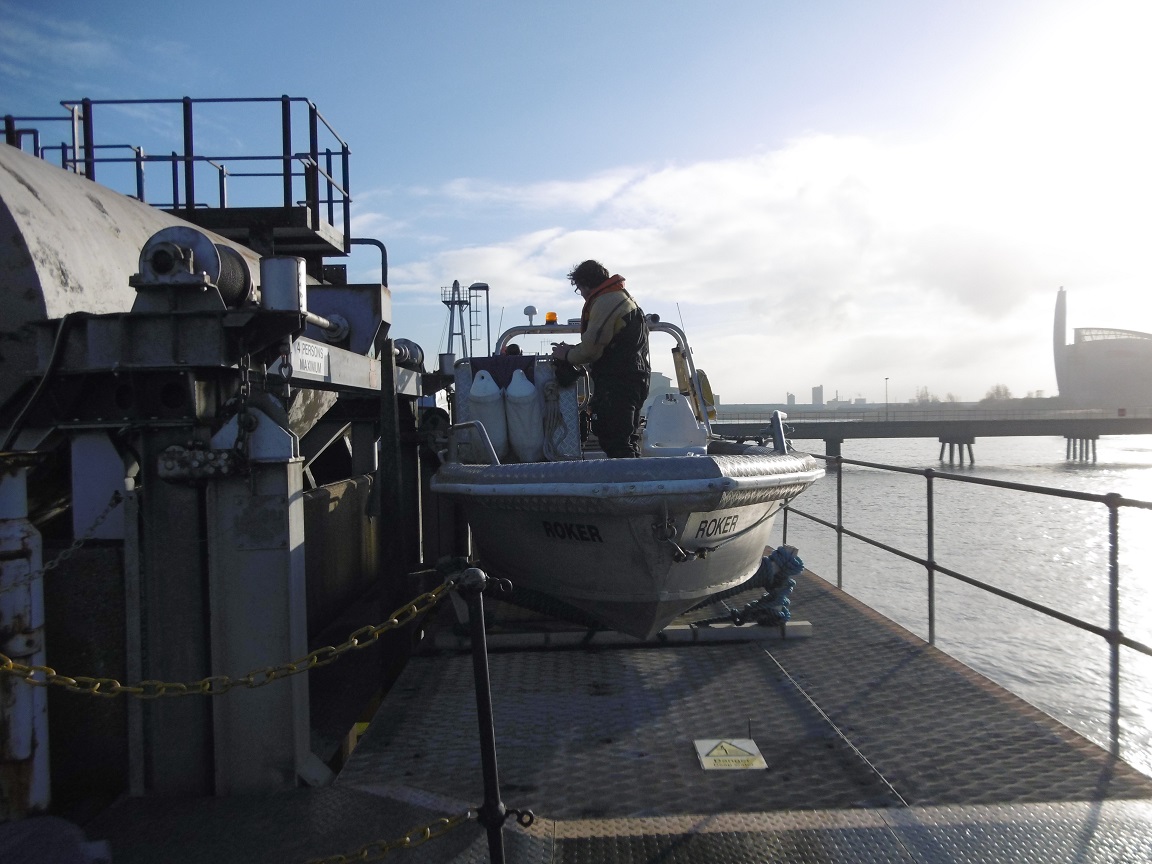
On the morning of the survey we launched at Crossness, from here it was a dash down river to Tilbury Docks; we gave it a while here to let the tide fully cover all the mud.


Launching at Crossness

As we started Broadness Point was covered and revealed a single Curlew, 30 Lapwing and 25 Redshank at roost. I also had a good look around here, in the past it has produced Turnstone, up to 7 birds one winter.

Pressing on we headed for the West Thurrock/Greenhithe area, only 6 Curlew at roost here on the West Thurrock side along with a single Oystercatcher.
Greenhithe fared better with 400 Dunlin and 100 Redshank as the main species, again both these sites have produced large numbers of these species in past winters.


Stone ness Point

Add caption


We also started to pick up various Warships, en route to the Isle of Dogs I suspect, or laying up alongside HMS Belfast, not sure what the occasion was but a spectacular sight.


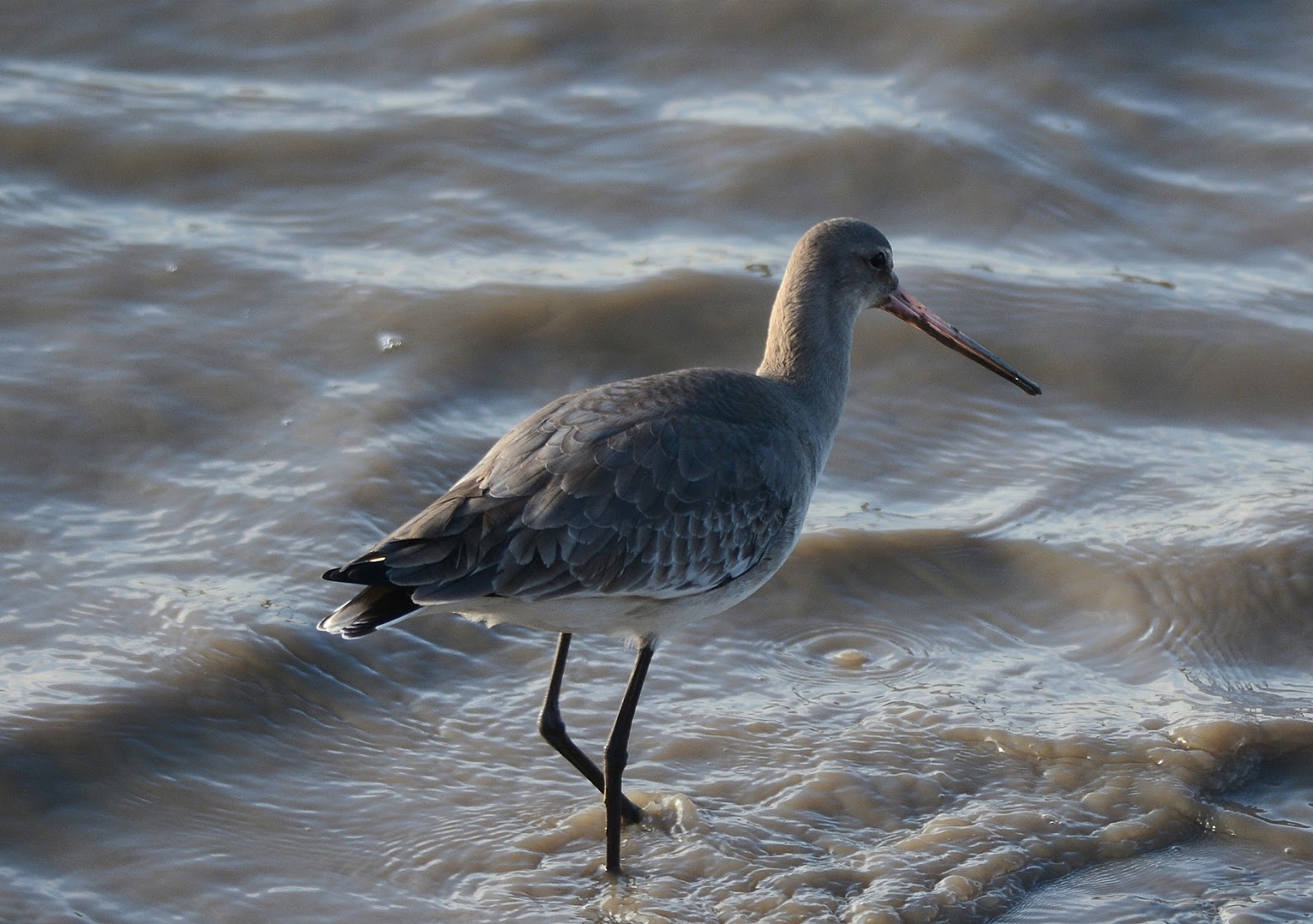
Moving on after visiting roosts at Purfleet, Littlebrook and Erith we eventually arrived at the Stone Barges, this proved occupied with good numbers of Black Tailed Godwit and Redshank present roosting.
After scanning the birds for around 5-10 minutes I arrived at a count of 70 Redshank and 250 Black Tailed Godwits, the odd Dunlin and Lapwing mixed in amongst them.

The Barges have been there as long as I can remember, as a kid in the 60’s I can recall visiting them with my parents, I suspect they could well have been there since the 2nd World War. In these days of change and environmental pressures, nothing ever seems to stay the same; hopefully they will remain and continue to provide roosts for Waders.


From here we headed a short way upriver to Dagenham Riverside, this is a roost I watch a lot, it is a large old derelict jetty, in the past it has produced counts of 1500+waders.It is also a regular winter Curlew roost, other than Rainham Marshes RSPB and Stone Ness Saltings, this is the only other Inner Thames Curlew roost site that I know of.


It produced a respectable 10 birds, given the species status recently as now threatened and on the Red List, it is important that none of these winter roost sites are lost or come under threat. I must admit to thinking it is a wader I take for granted along the Inner Thames, sad news that it is declining. 
Also on the Jetty were 7 Black Tailed Godwit, 20 Lapwing and 70 Redshank.

With the count recorded we headed upriver to the next roost at Beckton, checking Barking Bay roost en route showed an empty Jetty other than 40 odd Shelduck.

At Beckton 50 Redshank and a couple of Dunlin were present along the River Wall with a good number of Shelduck here also.


Our last port of call was Crossness River Wall; this is one of the big roosts in the Inner Thames and always provides good counts.

This is our jetty where we dock so it gave me plenty of time to scan the wall for numbers, it was obvious Dunlin were present in force, I eventually arrived at the following

Dunlin – 800
Black Tailed Godwit – 9
Redshank - 130
Lapwing – 60

A good survey overall, as expected numbers were down on the winter of 2014/2015, hopefully this is just a reflection on the mild weather. A lot of winter bird movement is cold weather related so likely many more will arrive when winter takes a hold.

Final Totals

Curlew – 17
Redshank – 500
Lapwing – 275
Dunlin – 1211
Oystercatcher – 1
Black Tailed Godwit – 266
Ringed Plover – 1


Friday, 27 November 2015

On The Thames


November 22nd


The morning started at Barking Outfall, at last it seems as if all the riverside major works are now complete, this will hopefully give bird numbers a chance to return.

It’s no coincidence that wader/wildfowl numbers have, over the last 2- 3 winters, declined at the Outfall due to the major disturbance.

Redshanks are back in position and I recorded 21 on the rocks, no other waders as yet and I still await Black Tailed Godwit for the year list. Before the construction work, they were pretty regular, however numbers in the Inner Thames are still low compared to previous winters.

Being a bright morning small birds were pretty prominent, at least 4 Chiffchaffs were seen along with good numbers of Grey Wagtails, Goldcrest and a solitary Rock Pipit graced the sewage works.

The sewage works also produced a wintering Green Sandpiper.


From here I headed downriver to catch up on the roost at Dagenham Riverside, however the tide had turned and the roosting occupants were already down on the exposed mud.

A count produced 6 Curlew, 101 Black Tailed Godwits, 54 Redshank and 76 Lapwing, the numbers are light compared to this time last year, much of this is due to the recent mild weather.


However still pretty good figures, next week I have a high tide boat survey so will get a more accurate count of the true numbers of waders in the Inner Thames.


Monday, 9 November 2015

Hoo Peninsula


November 8th


The first one for the month started off very well with an unexpected very late Whinchat for me and Paul seen on the entrance track, a very good start to the morning.

Starting our respective transects, Bearded Tits half way round were obvious by their absence and this seemed to be the case for many passerines compared to last month.

However I then got very lucky whilst scoping the Golden Plover picking up a superb Water Pipit feeding in the floods.
Eventually arriving at the River produced good numbers of Wigeon for the first time this winter, the weather is incredibly mild so usual numbers are down compared to last year.

Raptors as ever were in evidence with wintering Marsh Harrier numbers probably getting up around double figures and up to 3 Common Buzzards dotted around site.

In regard to the outright speed merchants, the annual pair of wintering Peregrines was occasionally visible bunching the Wader flocks up, mostly Lapwing.
Both myself and Paul connected with Merlin and we estimated that there were possibly 3 to 4 using the site, this included 2 females sparring over the River Wall.
They are tenacious and agile hunters, more so than a Peregrine, watching one hunting along the river wall flicking over from side to side trying to flush something I suspect is regular behaviour.

Without doubt the best seen bird went to a Short Eared Owl as we walked off site; I suspect I had seen the same bird earlier crossing from Essex to Kent.


Coming over from Essex being mobbed


Excellent views of the bird were had as it flushed and sat close by on a post for us.