Click on photos to enlarge, please do not copy photos without permission

Sunday, 2 June 2019

Spain - Osuna Day 2


Osuna

Day 2


Luis our guide for the day picked us up at 6.00 a.m from the hotel, still dark as we headed out for the Steppes and Farmland of the Osuna area.

After over an hour’s drive later and a nice breakfast to boot we arrived at dawn in Farmland, a nice little area off piste, on the way however we had already added Little Bustard, one of the target species.

As we were to find out during the rest of the day, there were many areas that produced so many good birds and this particular spot was just one of many.

First up was a calling Quail and then they all put in an appearance, White Stork, Red Rumped Swallow, Purple Heron, Montagu’s Harrier, Gull Billed Terns, Hoopoe but the stars of the show had to be 2 Great Bustards that dropped in out of knowhere.Only the 2nd time I have seen them you forget how big they are, even at distance size was apparent. One was a superb male no less as the pair foraged at the bottom of the field.

My interest however was in a line of pylons directly in front of us, in 2 respective pylons adjacent to each other there was a large nest in each, presumably old Raven nests, we had already seen a couple.

However both nests had been taken, a Peregrine Falcon in one and a Common Buzzard in the other, if there anything like they are in the UK, I would imagine quite a volatile relationship being this close to each other.

Both nests had 2 juveniles apiece and it looked like they weren’t far off fledging.

Being dry open Farmland, there were very few trees, the line of pylons were a nesting magnet and disappeared into the horizon. I could see nests on every one, too far to see if further occupied but I suspect many were likely were, the 2 we were watching even had Spanish Sparrow nesting in the twigs.


Juvenile Peregrines - one laying down

Common Buzzard guarding 2 juveniles

Great Bustards - distant but still enormous

Leaving here we headed for another area seeing bird’s enroute, another Little Bustard, Spectacled Warbler, Monties, Black Kite and more White Stork. Red Rumped Swallows were again present, every bridge section seemed to have them nesting, just a pity we don’t get them in numbers in the UK. 

All the driving was off road, during the course of the day we spent most of the time out in the wilds and even on disused or not open motorway type roads, you need a 4x4.

Moving on and we were stopped in our tracks by a hovering bird working the fields, a Black Winged Kite no less, personally, this was the one I wanted to see only ever having seen one other individual around 25 years ago.

My target species


We stayed in this area for over an hour, a nearby farm house and out buildings was a bird hotspot and contained a colony of Lesser Kestrels, the Black Winged Kite was still working the fields and at times you didn’t know where to look. 

Calandra and Crested Lark joined the list as did a Golden Oriole, a lovely male singing in the farmhouse trees, also another Montagu’s Harrier hunting nearby and more White Storks.

Whilst scanning the area I picked up a group of distant Raptors, it looked like they had been on the ground and were just coming up to thermal, this they did and more surprisingly they then flew straight for us.

It turned out to be a flock of 14 Honey Buzzards no doubt on their way to distant breeding grounds, they passed relatively low over us and gave outstanding views.

Unrelated to them we then picked up a larger Raptor and again this flew over us, an immature Egyptian Vulture no less, this particular area was proving very productive.

A Great Bustard was again seen, this time in flight, needless to say they are big birds.

Honey Buzzards

Up close


Great Bustard

Wouldn't come out

Immature Egyptian Vulture

Thoroughly spoilt for good birds and Spanish specialities, we move on to a relatively wet area along a disused road via lots of tracks. 

This was a massive field which held a number of Bulls bred for the Bullring, obviously don’t agree with it and sad to see so many magnificent animals knowing they had a bleak future. Way overdue to be banned in a modern world, how could people sit there and watch an animal suffer like that in a bullring?

Obviously the field and floods had attracted a lot of birds, first scan probably showed around 100 Glossy Ibises and probably half again of Cattle Egret, as we continued to scan up came a flock of around 20 Collared Pratincoles.These were very welcome and we then got individuals flying around before Luis picked out 2 Black Bellied Sand Grouse flying away from the floods, very lucky with these as it turned out to be the only ones we saw.

With the heat building, it was showing 36 degrees in the car, Osuna is one of the hottest areas of Spain we scanned the skies for Raptors.

A couple of Black Kites were followed by a Marsh Harrier and we then got a couple of Short Toed Eagles, one hovering and hunting with a 2nd on the deck at the far end of the field. Red Rumped Swallows were again present and as we left this area several Iberian Grey Shrikes and Whinchat put in an appearance, a cracking area that we all enjoyed.

Glossy Ibis

Black Bellied Sandgrouse

Short Toed Eagle

Collared Pratincole


We next headed for the area that held Rollers via lots of farm tracks, more than this a Roller Tower was present, never seen one of these and must admit they work with at least 5 Rollers present in their respective holes. 

Others were also present and I suspect there were at least 9 in the area along with some Jackdaws in the Tower, they were very flighty and we didn’t want to disturb them so left, lunch was calling.

Spanish Sparrow


Roller Tower

Spotted Flycatcher

After lunch we headed down to a massive field, along yet another set of very productive tracks and came across some good birds, Short Toed Lark, Tawny Pipit, Calandra and Crested Lark, Blue Headed Wagtail, Corn Bunting, Montagu’s Harrier and Whinchat. We spent some time here and then headed along another track picking up Spotted Flycatcher along the way before we arrived at a large lake. 

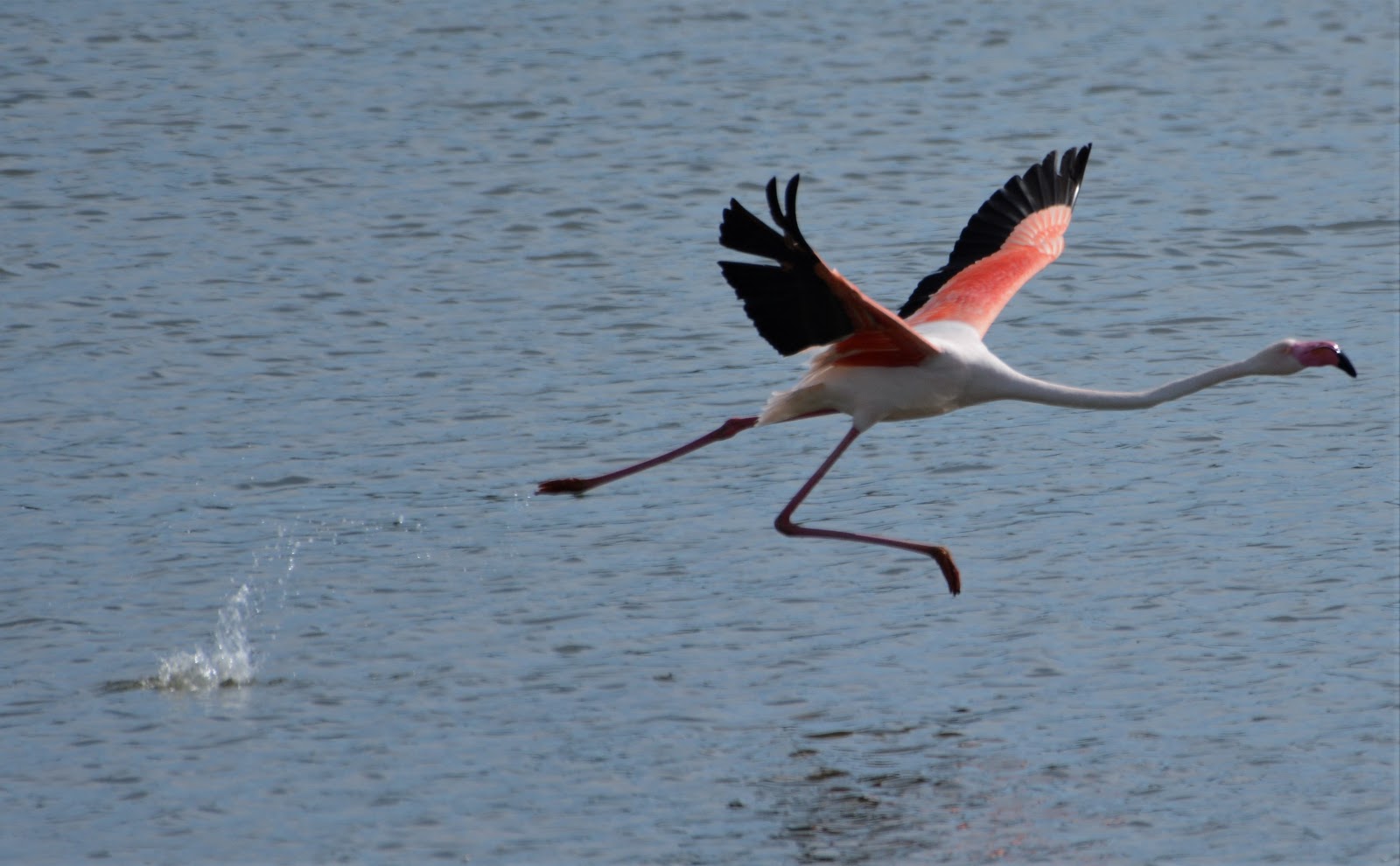
We added Spoonbill here and Collared Pratincole again and there were also a number of Greater Flamingos, some quite close, lots of photos as you can imagine. This was to be our last site and I think it was fair to say that we were flagging; I suspect the previous day’s excursions were also catching up.

A great end to the day, or so we thought, an unscheduled trip on the way home was a very welcome surprise as we popped into Fuenta De Piedra, the flood on the left as you enter was absolutely alive with birds.

To name but a few.

12+ Black Terns

Whiskered Tern

3 Little Stints

10+ Curlew Sandpiper

5 Audouin’s Gulls

16 Greater Flamingo’s


We were all running round like headless chickens with the cameras as the birds were so close, add to that people were at the side of the lagoon and the birds weren’t disturbed at all by them, a very impressive site.


Black Tern


Greenshank


Whiskered Tern with Curlew Sandpipers


Curlew Sandpipers

The icing on the cake and our day, was a Great Spotted Cuckoo flying over picked up by Mart, a good spot as it turned out to be the only one we saw. 


Great Spotted Cuckoo


Black Veined White

We finished the day on 122 species; with 75 seen the previous day at the Mouth of the Guadalhorce we had added 47 new species for the day. I must admit to thinking we would struggle and get a lot less, a stunning day and a Black Winged Kite no less, the one bird I really wanted to see.

Sunday, 19 May 2019

Beckton May 17th


With grey skies and a rising tide I popped into the Sewage works on the off chance of there being a goodie on the River. Not my normal early a.m visit but a late morning quick visit to see if anything was around, its getting pretty manic with peregrine stuff at the moment so grabbing the chance of a visit whenever I can.

I have to say it paid dividends with some good birds seen and one no less a site tick that I should have picked up years ago, Little Gull.
I have to admit I cocked up the ID, I openly admit that Gulls don’t float my boat but I did think this initially was a Bonaparte’s Gull. I have always thought that if it was showing a black head, it was approaching adulthood so it would be showing a black underwing for Little, this didn’t hence thinking Bonaparte’s.

Putting the bird out with a BOC on local news and I was put right, very helpful and something that I will now remember.


Long overdue


It was a site tick no less and bought my site list nicely up to 140, not too shabby for a little urban patch so it was a good one to get under the belt finally, it had been in my head for a long while as well overdue.

Whilst watching the little chap, a 2nd Little Gull joined it for a short while before both headed off down river.

Before I saw these however one of the first birds I saw on sticking my head over the river wall was a Black Tern, this didn’t stay long at all and this headed off up river, very likely due to the Harbour Seal that suddenly appeared in the midst of the Black Headed Gulls.


Black Tern


On another section of the wall, 4 Whimbrel came out from the rocks, I didn’t get this last year if I recall so a welcome year tick.
The final year tick was 2 adult Mediterranean Gulls heading off down the Creek, this makes 12 I have seen at the patch to date this year and numbers have increased it seems everywhere.


Mediterranean Gulls
A good morning adding Little Gull, Black Tern, Whimbrel and Arctic Tern, I also saw the Gloriana go past, the Queens 90 foot royal barge, heading up river for some upcoming event I would imagine.


Chaps out on a jolly


Gloriana


Wednesday, 8 May 2019

Spain - Malaga


Yours truly and my good friends Lee Brown and Martin Blow hatched a plan a few months back to visit Spain, namely the Malaga area and try and connect with some Spanish specialities over the course of 3 days.

The idea being to not only see and photograph some good birds but to build a trip list to see what we could achieve over the visit. Lee and Martin both needed lifers so there was plenty of incentive to try and get as much out of the trip as possible, it spurred us on, especially the first day but more on that later.


Sites visited were thus

May 1st - Mouth of the Guadalhorce
May 2nd – Osuna
May 3rd – El Torcel and Hoz De Marin


We had deliberately booked the hotel so that we were in walking distance of the Mouth of the Guadalhorce reserve flanked by urban Malaga, the idea being get there at dawn to maybe pick up Barn Owl or Red Necked Nightjar(I got one of these on my last visit here in September 2015).

The first day was spent at Guadalhorce on foot but the 2nd and 3rd days we had arranged for Luis of
www.birdaytrip.es to pick us up for 2 days of guided birding. I can highly recommend Luis; he found us the birds and went out of his way taking us to Fuenta De Piedra for an unscheduled visit that was quite stunning.

Cost

Flights were very cheap, we got the late afternoon flight with EasyJet for £45.00 return, no hold luggage just cabin it works out cheaper.

Hotel

For 3 nights it came to £166.00 each, we stayed at the Hotel Campanile, we all found it ok and the food and service was good.


May 1st – Mouth of the Guadalhorce


Setting out in the dark we arrived as dawn showed with plenty of birds heard en route, Nightingale being very vocal as we crossed the bridge.
As we entered and it became light lots of birds gave themselves up, a distant flight of 20 odd Greater Flamingo’s was very nice as they wheeled around the site, we caught up with these later.

Red Rumped Swallows seemed to be everywhere and a flight of Herons coming into the Reserve turned out to be 4 Squacco’s, we tried to find these later but no luck, however we did see 3 Night Herons, one an adult.

As the morning gathered pace and the heat built we saw so many birds, Woodchat Shrike, Black Necked Grebe, White Headed Duck, Bee Eater, Crested Larks, Kentish Plover, Zitting Cisticola’s to name but a few, Black Winged Stilts were seemingly everywhere.

A highlight for all of us was a flock of 50+ Slender Billed Gulls, these stayed all day on the pools, often feeding around the Greater Flamingo’s as they stirred the mud up as they walked.


3 Amigo's

You can never get fed up of photographing these

Greater Flamingo's

Woodchat Shrike


Sardinian Warbler

Kentish Plover

Audouins Gull

Adult Night Heron

2 immature Night Herons


Lots of waders were present on the pools including flocks of Sanderling and Dunlin but also Curlew Sandpiper, Ringed/Little Ringed/Grey Plover and also a single Turnstone + Avocets.

Overhead Pallid Swifts seemed to outnumber Common Swifts and the pools also held Audouin’s and Mediterranean Gulls, Gull Billed and a single Whiskered Tern, there was so much to see you always had the feeling you could easily miss something.

By now it was afternoon, food and a beer was calling so we retired back to the Hotel, the list was growing so we returned mid afternoon to a couple of favoured pools that we had taken to, we got better views of a Ferruginous Duck seen in the morning. The light was also better for photography; the Slender Billed Gulls gave even better views.

Raptor passage had been nonexistent until late afternoon when 3 Booted Eagles came through, all 3 of different morphs with the pale bird looking particularly good.

If I recall we added another 3 birds to the list in the afternoon session, by now it was really hot but on the way in and out we came across a pair of Bee Eater’s, it looked like they were looking for a nest site. Stunning colours, you just don’t get to see them in the UK regularly, great to watch and virtually the last birds we saw as we called it a day on the Reserve.


Pale phase Booted Eagle


Slender Billed Gulls


Slender Billed Gull


We ended the day on 75 species, to be honest far more than I expected, we had walked 33,003 steps which equates to 21.78km, roughly 13 miles, never have these little legs gone so far but was it worth it.

Birds missed that may have been present, we couldn’t find the Bonaparte’s Gull, Little Bittern and Purple Swamphen were not seen but very likely there, Purple Swamphen is very elusive anyway so it was not expected.

Plenty of Little Egrets on the pools but no sign of Great White, presumably at its breeding grounds.

All in all a fantastic start to the 3 days with some great birds that we rarely see, I know that Lee had picked up plenty of ticks – next stop Osuna for Day 2, Farm and Steppe country this was one place I had always wanted to go – Black Winged Kite awaited.........


Saturday, 4 May 2019

Battersea Power Station - April


Where to start, a lot has happened in April to say the least, the triangular relationship between the Falcon, Immature and adult Tiercel has taken a new turn after observing copulation taking place, albeit distantly between both of the adults. 

Further to this, eggs have now been laid, quite a feat in itself given the current scenario, the father to the eggs being the adult Tiercel.

With the first egg being laid on April 9th, copulation has taken place with the Falcon flying off east to buildings/cranes where the adult Tiercel mated with her, the act undertaken she then flies back to the Power Station. Multiple daily copulation is usually needed for fertility, whether she has copulated enough is another matter in regards to eggs hatching, it could be that given the strained and irregular copulating relationship with the adult Tiercel, fertility may be an issue. I have observed copulation between the 2 adults at least 5 times in early January to the east of the site, hopefully it will be enough, there is no doubt that if they were bonded on site, copulation would happen more, we will see.

The reason behind the long distance meetings regarding copulation between the adults is that the adult Tiercel has not been able to remove the immature Tiercel. This is the single 2018 offspring of the Falcon and the previous resident Tiercel who disappeared in November 2018.Consequently the new adult Tiercel has not become territorial on site, he spends most of his time east of the site near Vauxhall, when he tries to enter the Power Station airspace he immediately clashes with the immature. I have seen this a number of times in April, with the immature seeing the adult off, it certainly happens every time I am present so I would imagine it is a daily occurrence.


A complex relationship, I had my money on the adult Tiercel replacing the immature Tiercel, I didn’t think the immature would be strong enough to keep an adult out, however despite the oddness of the relationship it may just work given that the immature has stepped up.

There is no doubt that the immature has designs on his mother, ledge display between the 2 happened quite a lot in early April, in a few months he will become an adult plumage peregrine and would likely form an incestual relationship with his mother for 2020.Obviously things could change, the father of the eggs cannot spend his time on the sidelines forever unable to fulfil his role surely.

When the first egg was laid, my first thoughts were these, how can the adult Tiercel give a nest relief (incubation changeover) or supply prey if he cannot displace the immature once she had laid the full clutch?

Additionally who will supply her with prey once she is incubating fully after 3 eggs, she cannot do both?

The answer to these questions is the immature, not only is he now supplying prey daily, he is also incubating whilst she feeds or preens before returning to the eggs.

As mentioned before, the Falcon does not interfere when the immature/adult Tiercels clash, she sometimes calls but does not intervene from what I have seen, possibly seeing which is the stronger, her offspring or the adult Tiercel?

When the immature brings in prey, as per normal she takes it from him, however she then still insists on feeding him still, a mother is a mother.


I have to say it is the strangest relationship I have come across in 20 years of watching peregrines, there is always something new to learn from them, interesting times ahead.